

Learn about Can Parrots Eat Chocolate. Find out what the facts are, the risks, and what alternatives you have for keeping your feathered friend healthy.
The sweet treat known as chocolate is made from roasted and ground cacao seeds and is usually sweetened and sometimes flavored with ingredients such as vanilla. Chocolate is a beloved indulgence that comes in a variety of forms, from creamy milk chocolate to rich dark chocolate.
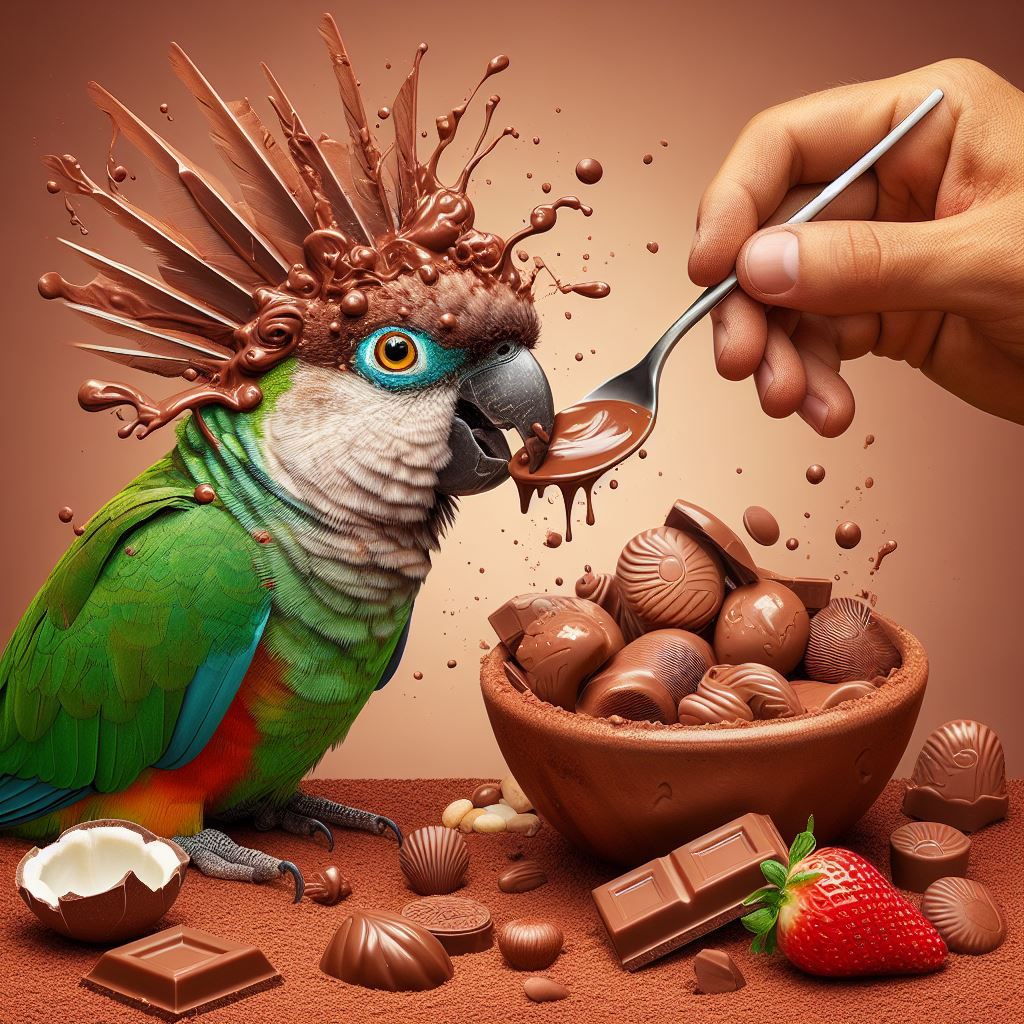
Sugar, milk solids, and cocoa butter are some of the other ingredients in chocolate, which contribute to its smooth texture and irresistible taste. The versatile ingredient chocolate is used in a variety of desserts, drinks, and confectionery products worldwide. A unique blend of flavors ranging from sweet and milky to bitter and intense makes it a universally beloved treat for people of all ages.
The Digestive System of Parrots
The digestive system of a parrot must be understood. The digestive tract of these colorful creatures is sensitive, which makes them vulnerable to foods that humans can easily digest. The complex compounds found in chocolate can be a challenge for their digestive system, resulting in potentially serious health complications.
Can Parrots Eat Chocolate?
No, chocolate poses a significant risk to parrots as well as many other animals due to its toxic components. Chocolate contains substances such as caffeine and theobromine, which can be harmful to a parrot’s health.
There are a variety of health problems that can arise as a result of these compounds, ranging from digestive upset to more serious problems such as heart palpitations or even neurological problems.
Tips for a Healthy Parrot Diet
The following tips will assist you in maintaining a healthy diet for your parrot:
1. Variety is the Spice of Life
A parrot’s diet should be varied, just like ours. It is essential that you provide your animals with a variety of fruits, vegetables, seeds, and pellets so that their taste buds will be tantalized, and their nutritional requirements will be met. To maintain an exciting and nutritious mealtime, rotate the food options weekly.
2. Prioritize Quality Ingredients
Choosing quality over quantity is the most important consideration when it comes to your parrot’s diet. If possible, choose organic fruits and vegetables in order to limit your exposure to pesticides and other harmful chemicals.
It is also important to invest in high-quality parrot pellets that do not contain additives or fillers. You should always provide the best for your parrot.
3. Hydration is Key
Your parrot’s health depends on its ability to maintain proper hydration levels. You should ensure that fresh, clean water is provided in a spill-proof bowl on a daily basis.
You may also wish to encourage them to drink more water by offering them moist foods, such as cucumbers or melons, during the warmer months of the year.
4. Monitor Portion Sizes
The temptation to shower your parrot with endless treats is strong; however, moderation is key. It is possible to become obese as a result of overfeeding.
You should consult your veterinarian for recommendations regarding portion sizes based on your parrot’s age, size, and activity level.
5. Limit Sugary Treats
You should resist the temptation to provide your parrots with sugary treats such as chocolates or candies, even though they have a sweet tooth.
A high intake of sugar may be detrimental to a person’s digestive system and lead to weight gain. As an occasional treat, choose natural sweets such as berries or mangoes.
6. Regular Health Checks
You should schedule routine health checks to monitor your parrot’s overall health and nutritional status. An exhaustive evaluation allows you to identify potential issues at an early stage, allowing you to intervene and treat them promptly.
The proactive approach you take towards your feathered companion helps lay the groundwork for a long and healthy life for it.
What happens if a parrot consumes chocolate?
The condition of your parrot should be addressed by a veterinarian immediately if you suspect that he or she has consumed chocolate.
Can any type of chocolate be given to parrots in small quantities?
Are there alternative treats that are safe for parrots?
A variety of fruits and vegetables, such as carrots, broccoli, and leafy greens, are also beneficial for the body. Parrot pellets are also formulated with essential vitamins and minerals.
Why is chocolate harmful to parrots?
Parrots’ digestive systems, heart rates, and nervous systems may be adversely affected by these compounds, putting their health at risk.
How can I ensure that my parrot stays healthy and avoids harmful foods like chocolate?
A healthy, happy parrot requires regular medical attention, a clean living environment, and appropriate toys and stimulation
Conclusion
Parrots are capable of digesting a broad range of foods, but chocolate should be avoided by these colorful birds. There are several substances in chocolate that are toxic to birds, including theobromine and caffeine. It is possible to experience serious health complications or even die from even a small amount of consumption. A diet aligned with your bird’s natural nutritional requirements is essential for their overall well-being.